
The Difference Between Income and Wealth
There’s no universal number — it depends on your spending, but there’s a widely used framework to calculate it for yourself.
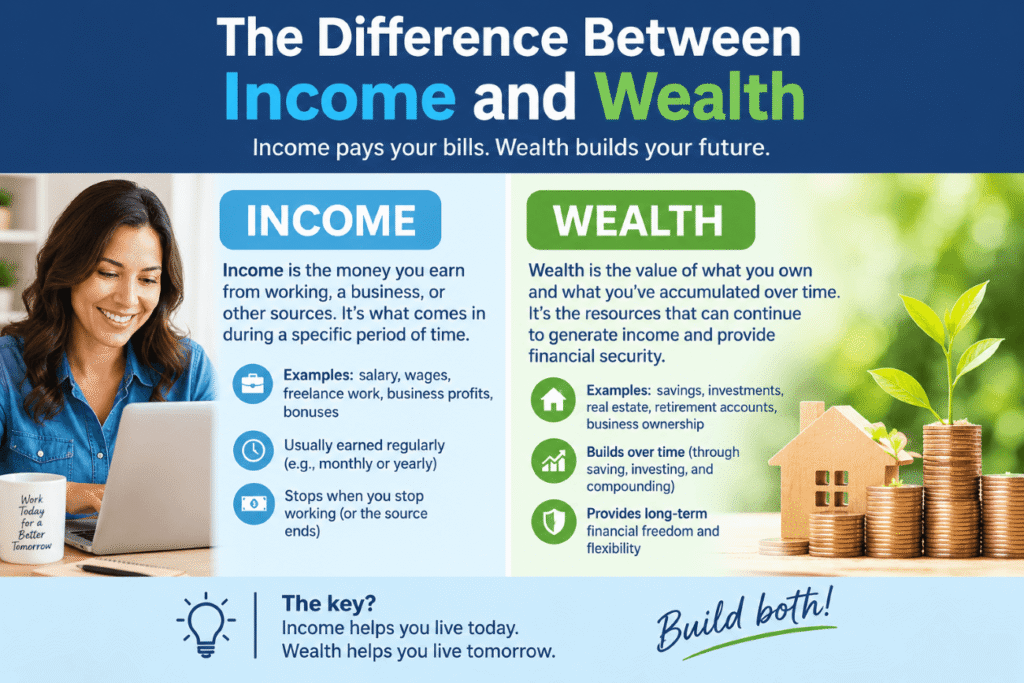
Income and wealth are not the same thing. Understanding the difference is an important first step toward building long-term financial security.
What Is Income?
Income is the money you earn. It can come from sources such as:
- Wages and salaries
- Self-employment or business income
- Commissions and bonuses
- Rental income
- Interest and dividends
- Retirement or Social Security benefits
Income gives you the ability to pay your bills, save money, and invest. However, a high income does not automatically mean that someone is wealthy.
What Is Wealth?
Wealth is the value of what you own after subtracting what you owe.
A simple way to think about it is:
Wealth = Assets − Liabilities
Assets may include:
- Cash and savings
- Retirement accounts
- Stocks, bonds, and mutual funds
- Real estate
- Business interests
- Other valuable property
Liabilities include things such as mortgages, credit-card balances, auto loans, and other debts.
Income Can Help You Build Wealth
Income provides the fuel for wealth building. The key is what you do with the money after you earn it.
For example:
Earn → Spend Less Than You Earn → Save → Invest → Grow Your Assets → Build Wealth
Someone who earns $100,000 a year but spends nearly all of it may accumulate little wealth. Someone who earns $60,000 and consistently saves and invests part of their income may gradually build substantial assets.
Focus on Building Assets
One of the biggest differences between income and wealth is cash flow versus ownership.
Income is generally measured by how much money comes in.
Wealth is measured by the financial resources you have accumulated and own.
The long-term objective is to use a portion of your income to acquire assets that can potentially grow in value or generate additional income.
The Bottom Line
Income helps you live. Wealth gives you financial resources for the future.
Building wealth doesn’t necessarily require a huge income. It requires a consistent strategy: control your expenses, reduce unnecessary debt, save regularly, invest appropriately, and give your assets time to grow.
Your income is what you earn. Your wealth is what you keep and build.

Ready to Create Your Wealth?
Take control of your financial future and start living life on your terms.