
What Is Financial Independence?
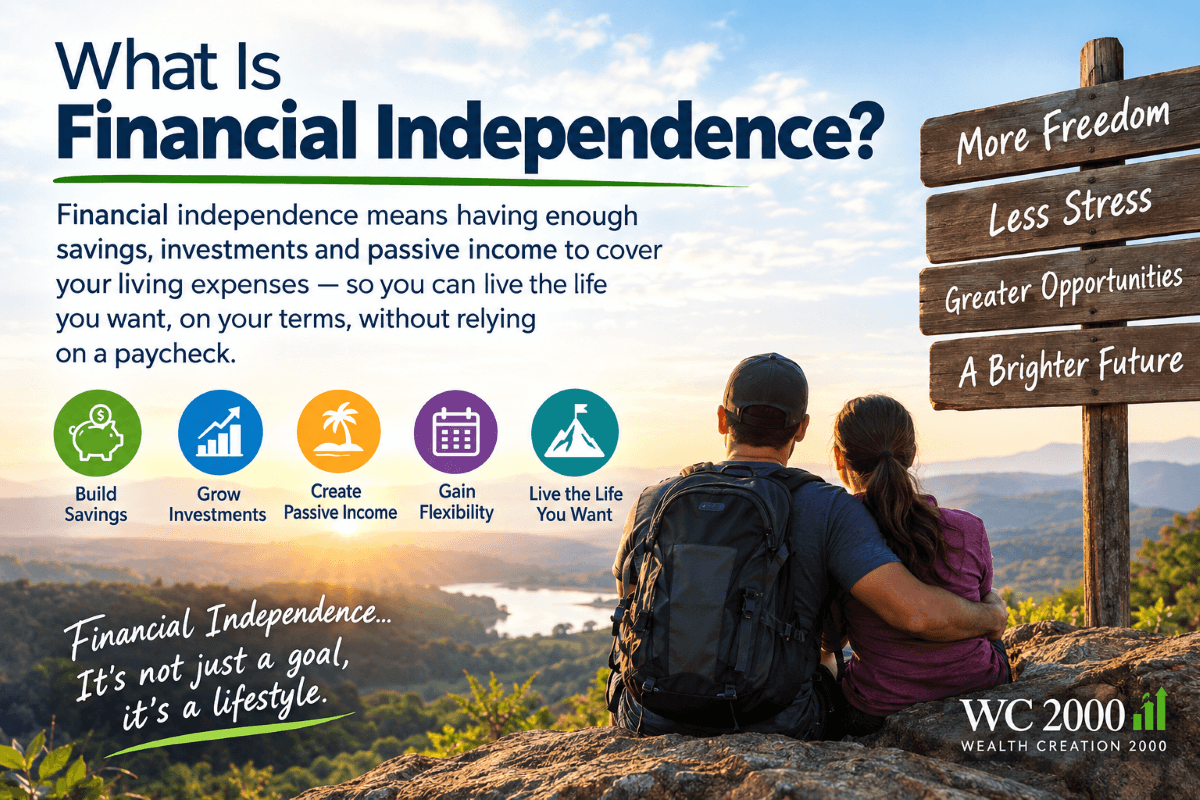
Financial Independence (FI) means having enough income from your investments, savings, or other assets to cover your living expenses without needing to work for a paycheck.
In simple terms: Your money earns enough money to pay your bills.
How it works
Suppose your annual living expenses are $50,000.
If you have investments that can safely generate around $50,000 per year, you are considered financially independent. At that point, working becomes a choice rather than a necessity.
The FI Formula
A common guideline is the 4% rule:
FI Number = Annual Expenses Divided by 4%
For Exmple:
| Annual Expenses | FI Number |
|---|---|
| $30,000 | $750,000 |
| $40,000 | $1,000,000 |
| $60,000 | $1,500,000 |
| $100,000 | $2,500,000 |
This means if you spend $60,000 per year, you would aim to accumulate about $1.5 million in invested assets.
Sources of Financial Independence
Your income after reaching FI might come from:
- Dividends from stocks
- Interest from bonds or savings
- Rental property income
- Capital gains from investments
- Business ownership
- Royalties or other passive income
Financial Independence vs. Retirement
They’re related but not the same.
- Financial Independence: You don’t need to work because your assets cover your expenses.
- Retirement: You choose to stop working.
Many people reach FI but continue working because they enjoy their careers or want additional income.
Levels of Financial Independence
People often describe different stages:
- Coast FI: You’ve saved enough that, if left invested, it should grow to support retirement without additional contributions.
- Lean FI: You can live comfortably on a relatively modest budget.
- Regular FI: Your investments support your current lifestyle.
- Fat FI: Your investments support a more luxurious lifestyle with significant financial flexibility.
Why people pursue Financial Independence
Common motivations include:
- Greater freedom to choose how you spend your time.
- Reduced financial stress.
- The ability to change careers, start a business, or take extended breaks.
- More time for family, travel, hobbies, or volunteering.
Key habits for achieving FI
- Spend less than you earn.
- Save and invest consistently.
- Build a diversified investment portfolio.
- Increase your income over time.
- Avoid high-interest debt.
Financial independence is ultimately about having enough wealth that work is optional, giving you the freedom to make life decisions based on what you want rather than what you need to earn.

Ready to Create Your Wealth?
Take control of your financial future and start living life on your terms.